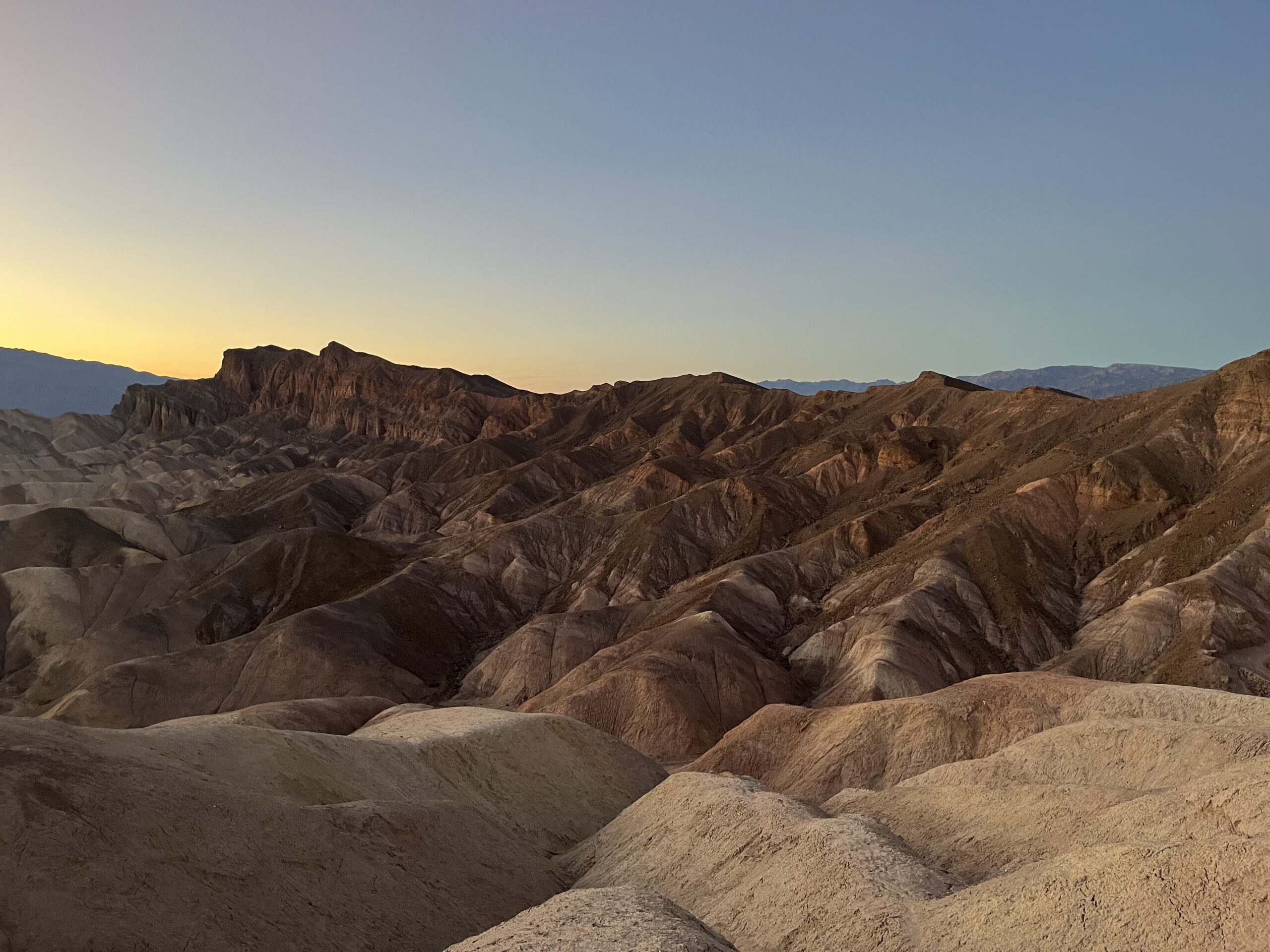

134 degrees Fahrenheit. That was the purported air temperature recorded on July 10, 1913 at Furnace Creek in Death Valley National Park, California, making it the hottest place on earth even to date. What’s it like to venture into this terrestrial hellscape? What grows there? What dies there? Luckily for you, some of us have lived to tell the tale. If you’re thinking about braving this geological marvel or perhaps a bit curious how I made it out alive, here’s the unadulterated truth:
Death Valley is vaster than you think it is (so use the buddy system). Nestled deep in the Mojave Desert, Death Valley National Park spans two states—southeastern California and a small segment of Nevada. When planning your visit, one of the first strategic choices you’ll have to make is whether you’ll join a tour group or go it alone. I highly recommend joining a tour group as Death Valley can be a logistical nightmare. Initially, I had considered renting a car and driving myself from Las Vegas (~1.5 hours) as I had done with the nearby Valley of Fire State Park. But I’m so glad I didn’t! Many roads are rugged and because of the park’s remoteness, amenities like gas, water, shelter, and help are miles in-between. You don’t want to risk running a flat or injuring yourself in this environment, especially if traveling solo. Many tours depart from Las Vegas, and several multi-day tours leave from San Diego and Los Angeles. This small-group tour I booked from Las Vegas through MaxTour was definitely the best choice! I was picked up from my hotel by a very knowledgeable guide in a panoramic van who supplied us with unlimited snacks and bottles of water throughout our day together. Although a bit pricey, I felt much safer traversing all of the park’s sites we visited in this way.
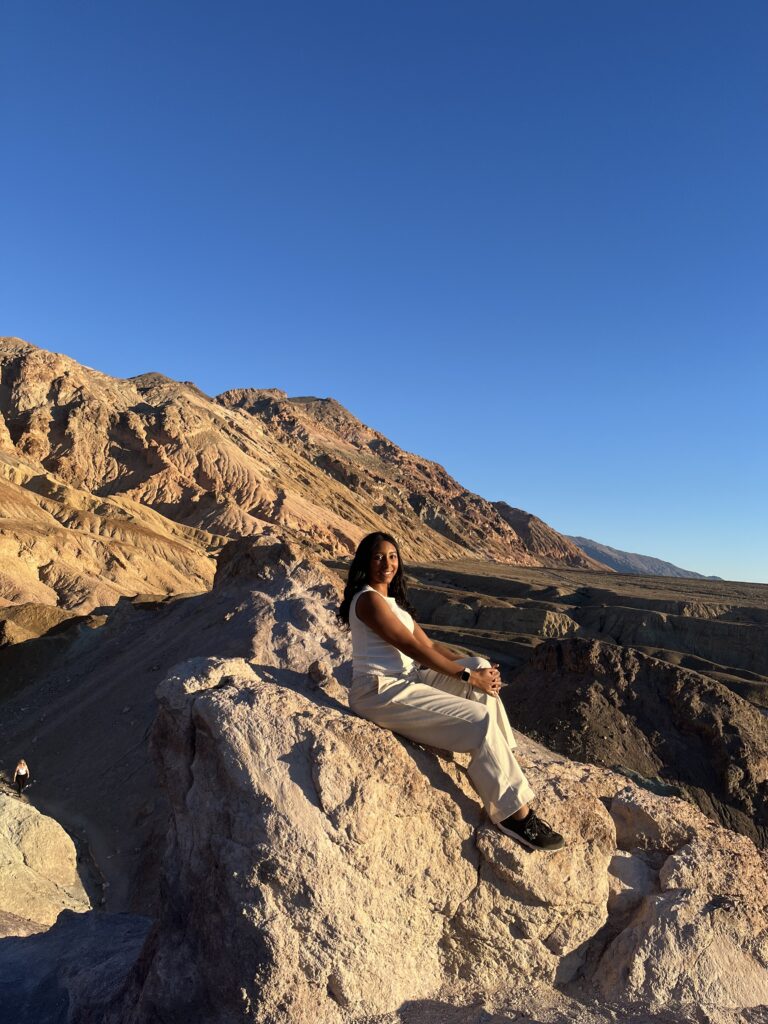
Visit during the winter. When I visited Death Valley, in the dead of winter (early February), the park was a balmy 80-85 degrees Fahrenheit in most places. It was pleasant enough to fully explore sites like Artists Palette, Badwater Basin, Dante’s View, Zabriskie Point, and the Devil’s Golf Course. November to March is the most ideal weather you’ll get year-round. If you decide to visit during the summer, your experience may be cut short because of the heat.
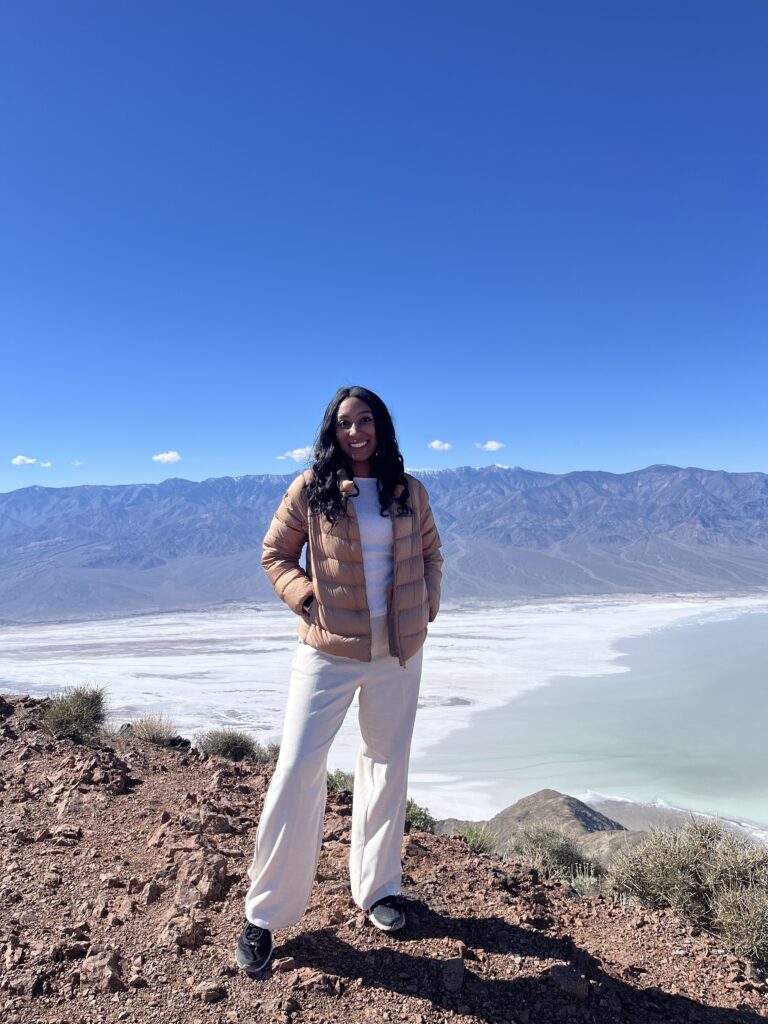
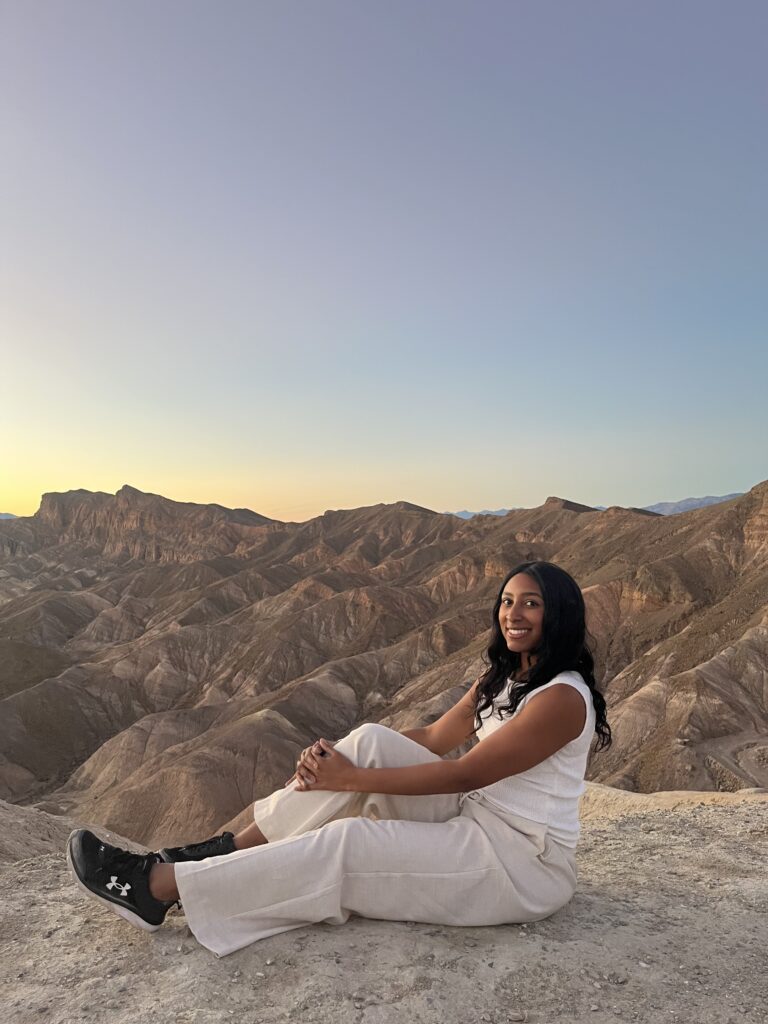
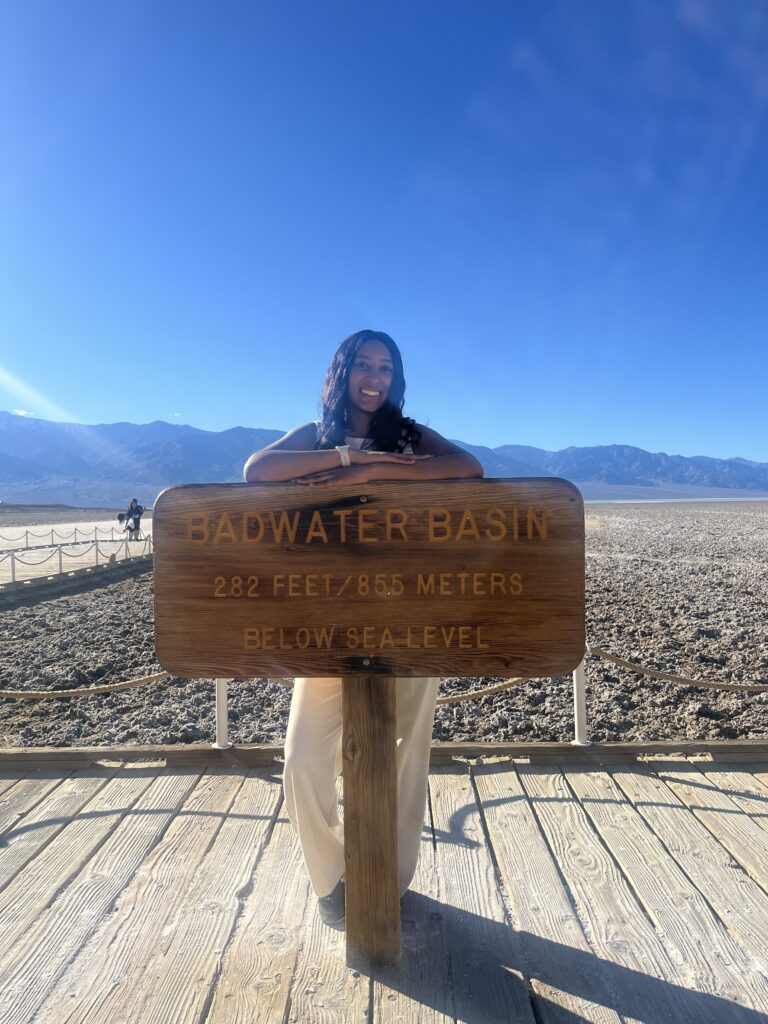
Pack for the extremes. Remember how vast I said Death Valley was? Well, that applies to its weather patterns as well. The park’s name is a bit of a misnomer because at its highest point, Telescope Peak (which is 11,000+ feet above sea level) the air can feel quite cool. But at Badwater Basin (the lowest point in North America at -288 feet below seal level), it’s exceptionally hot. Packing a thin jacket will help with the weather transitions. More importantly, wear light-colored, breathable fabrics that reflects the heat. Take a hat and sunglasses. And wear hiking boots or tennis shoes with good grip as you’ll be walking and at times, climbing.
Unless you’re an experienced hiker or connoisseur of the great outdoors, a day trip is enough. I considered doing a multi-day tour as well as staying overnight on my own, but nixed both options in favor of a day trip. Part of my decision hinged on the fact that there are only two lodging options inside the park: The Inn at Death Valley and The Ranch at Death Valley, both located in Furnace Creek. Both are pretty expensive. Also, if you’re planning to spend more time in Las Vegas or other surrounding areas, it’s best to do the park as a day trip.

Pack water and stay hydrated. This one’s especially important! Above all else, drink plenty of water. Whether you’re visiting Death Valley with a tour group or on your own, buy about 4 liters of water per person before entering the park. Pricing goes up inside the park.
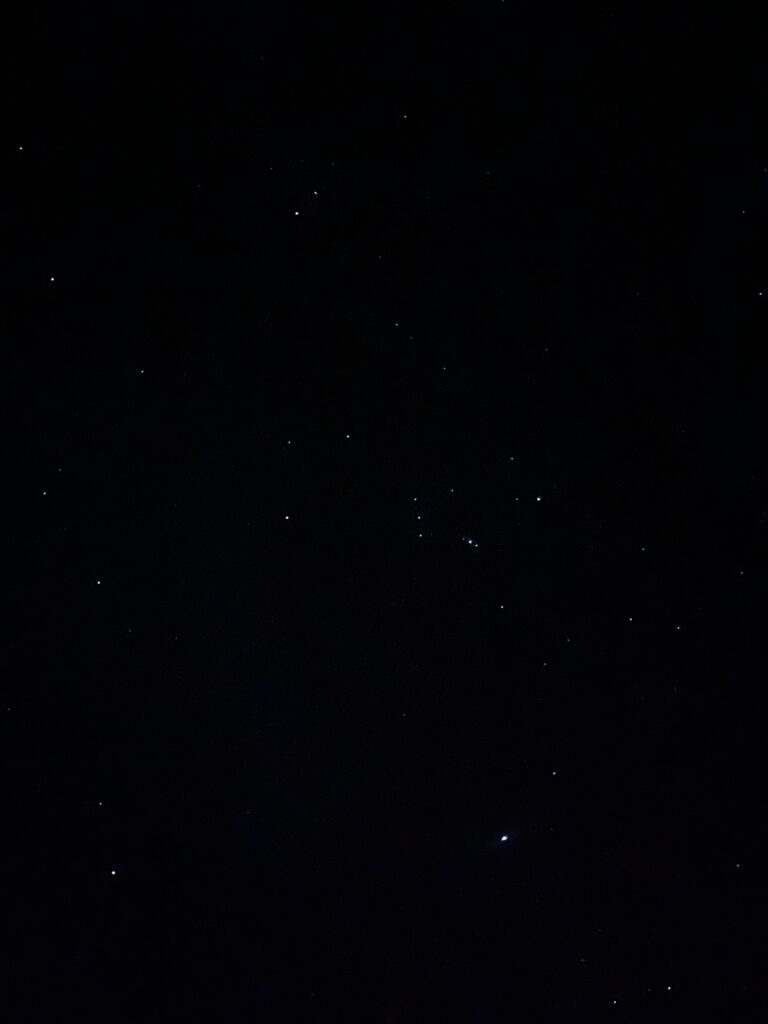
Don’t skip the stars. Death Valley is designated as a Gold Tier International Dark Sky Park. That means you have the opportunity to see something very few people across the country ever experience fully—the night sky. Being from the east coast, I marveled at all the stars I couldn’t see back home because of light pollution. I recommend finding a tour that includes this feature, and downloading the Stellarium app which shows you exactly what you’re seeing as you stargaze. It really capped off my experience at Death Valley.
Here’s a look at the night sky taken with just my iPhone 13 Plus: